
Opinion|Videos|January 12, 2026
Interpreting CP Data, Secondary Mutations, and Bridging Strategies to Transplant
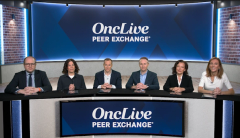
Segment 5 explores more deeply the clinical implications of CP-based regimens and how they compare with venetoclax-based therapy when preparing patients with AML for allogeneic transplant. The
Advertisement
Episodes in this series
Segment 5 explores more deeply the clinical implications of CP-based regimens and how they compare with venetoclax-based therapy when preparing patients with AML for allogeneic transplant. The panelists reflect on data showing unexpectedly strong post-transplant survival among patients treated on phase III CP-351 trials, particularly in AML with MDS-related changes. Some studies report 40% survival at 10 years in certain subgroups, results rarely observed historically in MDS-related AML. Although these findings raise the question of whether CP regimens provide uniquely beneficial disease control before transplant, the panel notes that patient numbers are small, limiting definitive conclusions.
The experts revisit the retrospective Hopkins comparison of venetoclax-based therapy versus intensive chemotherapy before transplant. Although encouraging, they caution that the data remain non-randomized and susceptible to bias. Still, for many clinicians this retrospective evidence provides enough reassurance that venetoclax can serve as a suitable bridge to transplant in selected patients, particularly those with secondary-type mutations, who appear to derive meaningful benefit from venetoclax-based regimens.
The speakers also discuss puzzling aspects of older CTC (or CP-like) transplant data, including how post-transplant survival advantages were achieved. They question whether improved non-relapse mortality, from fewer infections or reduced pre-transplant toxicity, fully explains the outcomes, or whether deeper remissions might also play a role. Because earlier trials lacked sophisticated MRD assessments, it remains unclear whether CP regimens produce molecularly superior remissions.
The segment then shifts to the broader question of designing optimal induction approaches for younger or fit patients. Although paradigm-shifting trials may expand the role of lower-intensity induction, intensive chemotherapy still offers strong remission depth and is likely to remain important for many transplant candidates. Ultimately, the group underscores that treatment selection must integrate disease biology, mutation profile, fitness, and transplant goals rather than relying on a one-size-fits-all approach.
Advertisement
Related to this article

A pilot study represents a milestone toward testing a faster, more powerful, and potentially less-toxic form of radiation therapy for cancer treatment.
Oral azacitidine and cedazuridine met the end point of total cycle azacitidine exposure vs subcutaneous azacitidine in MDS or CMML.
UTRxMYCN M1-14 received orphan drug status for soft tissue sarcoma and RPDD for rhabdomyosarcoma.
Interim data showed that the BCMA-directed CAR T-cell therapy NXC-201 generated complete responses in relapsed/refractory AL amyloidosis.
Estelamari Rodriguez, MD, MPH, discusses the rationale, design, and practice implications of the phase 3 RELATIVITY-1093 trial in nonsquamous NSCLC.
Experts spotlight the variety of breast cancer research being presented at the 2026 ESMO Congress.

The third BLA submission for tabelecleucel follows 2 CRLs and includes updated ALLELE data with additional patients and longer follow-up.
A New England Journal of Medicine report describes complete hepatoblastoma regression in a 3-year-old treated with a novel immunotherapy.
Advertisement
Advertisement
Trending on OncLive
1
FDA Grants Fast Track Designation to Plinabulin Plus Docetaxel in Post-ICI Non-Squamous NSCLC
2
Breast Cancer Experts Highlight Abstracts to Watch at ESMO 2026
3
Navigating DLL3-Targeting T-Cell Engagers and the Evolving Small Cell Lung Cancer Treatment Landscape
4
FDA Approves Denosumab Biosimilar for Skeletal-Related Events, GCTB, and Hypercalcemia of Malignancy
5