
Opinion|Videos|January 26, 2026
Core Binding Factor Leukemia and the Continuing Role of Intensive Chemotherapy in AML
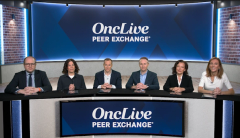
This segment describes a foundational point in AML management: despite rapid advancements in lower-intensity therapies, intensive chemotherapy remains essential for certain biologically favorable AML subsets.
Advertisement
Episodes in this series
This segment describes a foundational point in AML management: despite rapid advancements in lower-intensity therapies, intensive chemotherapy remains essential for certain biologically favorable AML subsets. The panel emphasizes that the emergence of triplet combinations and evolving venetoclax-based approaches should not obscure the fact that some forms of AML are highly curable with established intensive regimens.
The discussion highlights core binding factor (CBF) leukemias, characterized by t(8;21) and inv(16), as prime examples. These patients historically demonstrate excellent long-term outcomes with intensive cytarabine-based induction and consolidation. The experts caution that, despite enthusiasm for newer therapies, there is no current evidence supporting the replacement of intensive chemotherapy in these settings. The goal must remain cure, and altering curative approaches without proof from randomized data risks undermining decades of progress.
They extend this reasoning to other molecularly favorable groups, such as NPM1-mutated AML with normal cytogenetics. Although newer strategies may someday prove effective enough to replace intensive therapy, the current standard of care remains intensive induction followed by risk-adapted consolidation or transplant, depending on MRD evolution and emerging risk features.
Panelists also reiterate that low-intensity induction strategies, such as azacitidine–venetoclax, should not be interpreted as “7+3 replacements.” They note that although these regimens achieve deep remissions in many patients, their role as curative therapies in younger, fit individuals remains unproven. Small clinical experiences described by the panel show that severely shortening venetoclax duration or using it as a 7-day monotherapy induction does not reliably replicate the outcomes of established intensive chemotherapy.
Although innovation continues, clinicians must protect curative therapies in patients most likely to benefit from them.
Advertisement
Related to this article
A pilot study represents a milestone toward testing a faster, more powerful, and potentially less-toxic form of radiation therapy for cancer treatment.
Oral azacitidine and cedazuridine met the end point of total cycle azacitidine exposure vs subcutaneous azacitidine in MDS or CMML.
UTRxMYCN M1-14 received orphan drug status for soft tissue sarcoma and RPDD for rhabdomyosarcoma.
Interim data showed that the BCMA-directed CAR T-cell therapy NXC-201 generated complete responses in relapsed/refractory AL amyloidosis.

Estelamari Rodriguez, MD, MPH, discusses the rationale, design, and practice implications of the phase 3 RELATIVITY-1093 trial in nonsquamous NSCLC.

Experts spotlight the variety of breast cancer research being presented at the 2026 ESMO Congress.

The third BLA submission for tabelecleucel follows 2 CRLs and includes updated ALLELE data with additional patients and longer follow-up.

A New England Journal of Medicine report describes complete hepatoblastoma regression in a 3-year-old treated with a novel immunotherapy.
Advertisement
Advertisement
Trending on OncLive
1
FDA Grants Fast Track Designation to Plinabulin Plus Docetaxel in Post-ICI Non-Squamous NSCLC
2
Breast Cancer Experts Highlight Abstracts to Watch at ESMO 2026
3
Navigating DLL3-Targeting T-Cell Engagers and the Evolving Small Cell Lung Cancer Treatment Landscape
4
FDA Approves Denosumab Biosimilar for Skeletal-Related Events, GCTB, and Hypercalcemia of Malignancy
5