

Building on research his father conducted decades earlier, Robert Orlowski, MD, PhD, redefined myeloma treatment.
Building on research his father conducted decades earlier, Robert Orlowski, MD, PhD, redefined myeloma treatment.

The combination of neoadjuvant vidutolimod and nivolumab elicited high response rates and was well tolerated in patients with high-risk, resectable melanoma, according to final results from a phase 2 trial.

Enrollment has been paused for a phase 1 trial investigating the peptide-drug conjugate TH1902 for the treatment of patients with sortilin-expressing cancers.

Treatment with lutetium Lu 177 vipivotide tetraxetan led to a statistically significant and clinically meaningful improvement in radiographic progression-free survival following treatment with an androgen receptor pathway inhibitor in patients with prostate-specific membrane antigen–positive metastatic castration-resistant prostate cancer.

Press Release
Florida Cancer Specialists & Research Institute welcomes Board-certified medical oncologist Ke Ning, MD to the Sarasota Downtown clinic team.

For patients with colon cancer, traditional clinical and pathologic risk factors may soon take a backseat as stratification tactics for determining optimal candidates for adjuvant chemotherapy.

The combination of sintilimab and anlotinib elicited improved responses and progression-free survival compared with chemotherapy in previously untreated patients with metastatic non–small cell lung cancer.

Olaparib plus durvalumab and bevacizumab led to prolonged survival and disease control without causing additive toxicity in patients with non-germline BRCA-mutated, platinum-sensitive, relapsed ovarian cancer.

A girl who grew up in a small South Dakota town, Julie M. Vose, MD, MBA, grew into a dynamo who revolutionized lymphoma treatment and led the most prominent oncology organization in the world.

The European Medicines Agency has accepted a marketing authorization application for momelotinib as a treatment for patients with myelofibrosis.

The FDA has issued a complete response letter to the biologics license application seeking the approval of 131I-omburtamab for the treatment of pediatric patients with central nervous system/leptomeningeal metastases from neuroblastoma.

Press Release
It’s long been known that DNA damage caused by environmental triggers, as well as other sources of oxidative stress, contribute to the development and progression of a wide variety of cancers.
Dostarlimab plus standard-of-care chemotherapy, followed by dostarlimab alone, produced a statistically significant and clinically meaningful improvement in progression-free survival vs chemotherapy alone in patients with primary advanced or recurrent endometrial cancer.

Pharmaceutical manufacturer EQRx announced December 2, 2022, that the European Medicines Agency has accepted a marketing authorization application for the use of aumolertinib in EGFR-mutated non–small cell lung cancer and locally advanced or metastatic EGFR T790M mutation–positive NSCLC.
The FDA has granted an orphan drug designation to AUM302 for the treatment of patients with neuroblastoma.

The PI3K cell-signaling network has been an important therapeutic target in oncology research for nearly 40 years ago, but the use of PI3K inhibitors in hematologic malignancies has come under scrutiny amid concerns about efficacy and safety.

Stephen V. Liu, MD, highlights the advantages of antibody-drug conjugates in lung cancer treatment, the current landscape of antibody-drug conjugate development, and several questions and considerations for continued investigation.

The FDA has approved olutasidenib (Rezlidhia) capsules for adult patients with relapsed or refractory acute myeloid leukemia with a susceptible IDH1 mutation as detected by an FDA-approved test.

Zimberelimab monotherapy demonstrated durable responses and was well tolerated in patients with PD-L1–positive, recurrent or metastatic cervical cancer who had progressed after first- or subsequent-line, platinum-containing chemotherapy, according to data from a phase 2 trial.

The European marketing authorization application of infigratinib for the treatment of advanced cholangiocarcinoma harboring FGFR2 fusions or rearrangements has been withdrawn by Helsinn Birex Pharmaceuticals.

The FDA has granted a fast track designation to pelareorep for use in combination with atezolizumab, gemcitabine, and nab-paclitaxel for the treatment of patients with advanced or metastatic pancreatic cancer.
The FDA has accepted a biologics license application seeking the approval of a reformulation of denileukin diftitox for use as a potential therapeutic option in patients with persistent or recurrent cutaneous T-cell lymphoma.

In a new study, investigators at Dana-Farber Cancer Institute demonstrate that changes in immune system cells can indicate which patients with high-risk "smoldering" myeloma are likely to progress to myeloma and which will benefit the most from treatment.

Fam-trastuzumab deruxtecan-nxki induced tumor reduction in more than 60% of patients with HER2-low gastric or gastroesophageal junction adenocarcinoma.

Montefiore Einstein Cancer Center hopes to begin combating systemic inequities and improve cancer outcomes for historically disadvantaged populations by taking a data-driven approach to delivering neoadjuvant therapy in communities that are economically and socially marginalized.

Evan J. Lipson, MD, expands on key takeaways from the NEOpredict-Lung trial, the additional benefit that PICIT may offer to patients who progress on other immunotherapies, and the effect that both NEOpredict-Lung and RELATIVITY-047 have on the role of immunotherapy in the lung and melanoma treatment paradigms.
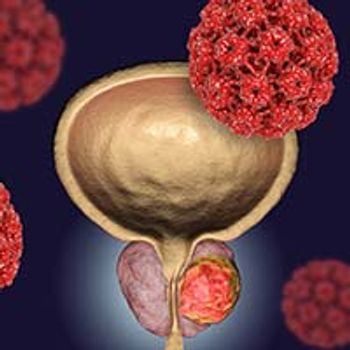
Six months of enzalutamide monotherapy in combination with salvage radiation therapy postponed prostate-specific antigen progression compared with SRT alone in men with PSA-recurrent, high-risk prostate cancer.

The oncolytic vaccine CG0070 plus pembrolizumab demonstrated encouraging response rates and a tolerable safety profile in patients with non–muscle invasive bladder cancer unresponsive to Bacillus Calmette-Guérin.

Aarti Bhatia, MD, discusses the rationale for investigating berzosertib in this patient population, key updates from the phase 1 trial, and how these findings support the need for continued research of novel regimens in HNSCC.

Nivolumab alone or in combination with ipilimumab produced encouraging responses that were maintained over time in patients with recurrent or metastatic cervical cancer.