



Immuno-Oncology
Latest News

June 29th 2021
By Kristi Rosa
The European Commission has approved pembrolizumab plus platinum- and fluoropyrimidine-based chemotherapy for the frontline treatment of patients with locally advanced unresectable or metastatic carcinoma of the esophagus or HER2-negative gastroesophageal junction adenocarcinoma whose tumors have PD-L1 expression.
Advertisement
Latest Videos





































































Advertisement
More News

Pembrolizumab plus platinum-based chemotherapy with or without bevacizumab significantly improved overall survival and progression-free survival over the same platinum-based chemotherapy regimen with or without bevacizumab in patients with persistent, recurrent, or metastatic cervical cancer—irrespective of PD-L1 status.

Daratumumab-based quadruplet regimens and cutting-edge immune-based therapies are positioned to become potential standard options in frontline multiple myeloma treatment.

The addition of sintilimab to standard chemotherapy comprised of gemcitabine and platinum significantly improved progression-free survival with acceptable safety in previously untreated patients with advanced or metastatic squamous non–small cell lung cancer.

Adjuvant nivolumab led to a significant improvement in disease-free survival compared with placebo in patients with high-risk muscle-invasive urothelial carcinoma following radical surgery, irrespective of PD-L1 expression level.
Dr. Patel discusses the significance of the new collaboration between The University of Texas MD Anderson Cancer Center and TriSalus™ Life Sciences.

The personalized cancer vaccine AV-GBM-1, developed by AIVITA Biomedical Inc., significantly improved progression-free survival over standard of care in patients with newly diagnosed glioblastoma.

Nivolumab monotherapy, or in combination with ipilimumab, continued to demonstrate durable improvements in overall survival compared with ipilimumab alone in patients with previously untreated advanced melanoma.

The addition of lifileucel to pembrolizumab resulted in an overall response rate of 85.7% compared with pembrolizumab alone in patients with immune checkpoint inhibitor–naïve advanced melanoma.

The European Commission has approved the dual immunotherapy combination of nivolumab and ipilimumab for use in the frontline treatment of adults with unresectable malignant pleural mesothelioma.
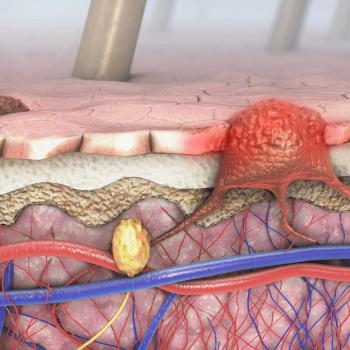
The safety and efficacy of the combination of vidutolimod and nivolumab is currently under investigation in patients with PD-1–refractory advanced melanoma.

Pembrolizumab alone and in combination with chemotherapy was associated with shorter overall survival compared with the data demonstrated in the registrational clinical trials in older Medicare patients with advanced non–small cell lung cancer, providing real-world insight into the prognosis of older patients with NSCLC who are treated with immunotherapy.

The European Medicines Agency’s Committee for Medicinal Products for Human Use has recommended the approval of cemiplimab for use in 2 advanced cancers: non–small cell lung cancer and basal cell carcinoma.

High tumor mutational burden was useful in predicting clinical responses to checkpoint inhibitors in patients with certain cancer subtypes; however, TMB-H failed to demonstrate utility as a biomarker for treatment with checkpoint inhibitors across all solid cancer types.
The European Medicines Agency’s Committee for Medicinal Products for Human Use has recommended the approval of pembrolizumab plus platinum- and fluoropyrimidine-based chemotherapy for the frontline treatment of patients with locally advanced unresectable or metastatic esophageal carcinoma or HER2-negative gastroesophageal junction adenocarcinoma with PD-L1 positivity.
A biologics license application has been submitted to the FDA for the PD-1 monoclonal antibody penpulimab for the third-line treatment of patients with metastatic nasopharyngeal carcinoma.

The combination of the anti–PD-1 tislelizumab and chemotherapy was found to significantly improve progression-free survival compared with chemotherapy alone in the frontline treatment of patients with recurrent or metastatic nasopharyngeal cancer, meeting the primary end point of the phase 3 RATIONALE 309 trial.
The FDA has approved nivolumab for the adjuvant treatment of completely resected esophageal or gastroesophageal junction cancer with residual pathologic disease, in patients have received neoadjuvant chemoradiotherapy.

The PD-1 inhibitor cemiplimab resulted in a 31% reduction in the risk of death compared with chemotherapy in patients with recurrent or metastatic cervical cancer who have progressed on chemotherapy.

Neoadjuvant pembrolizumab in combination with chemotherapy followed by adjuvant pembrolizumab monotherapy resulted in a significant improvement in event-free survival and pathologic complete response vs neoadjuvant chemotherapy alone in patients with high-risk, early-stage triple-negative breast cancer.

Columbia University Irving Medical Center will partner with Advaxis, Inc. to fund a phase 1 clinical trial that seeks to examine the novel off-the-shelf neoantigen immunotherapy agent ADXS-504 in patients with biochemically recurrent prostate cancer.

Erminia Massarelli, MD, MS, PhD, shares key updates in immunotherapy and targeted treatment for patients with NSCLC

Ravi Salgia, MD, PhD, discusses pivotal trials that have shaken up the SCLC treatment paradigm and novel immunotherapy regimens under investigation.

The FDA has granted priority review to applications that are seeking 2 approvals of pembrolizumab in combination with lenvatinib in advanced renal cell carcinoma and advanced endometrial carcinoma.

Arsen Osipov, MD, discusses the role of combination immunotherapy across multiple tumor types.
The FDA's Oncologic Drugs Advisory Committee voted 7 to 2 in support of maintaining the indication of atezolizumab in combination with nab-paclitaxel as a treatment for adult patients with unresectable locally advanced or metastatic triple-negative breast cancer whose tumors are PD-L1 positive.
Advertisement
Advertisement
Trending on OncLive
1
FDA Approves Tucatinib Plus Trastuzumab/Pertuzumab as First-Line Maintenance in Advanced HER2+ Breast Cancer
2
Iberdomide Plus Daratumumab/Dexamethasone Yields Significant PFS Benefit in R/R Myeloma
3
FDA Approves Atezolizumab Plus Chemo for Stage III dMMR Colon Cancer
4
VIR-5500 Receives FDA Fast Track Designation in mCRPC
5