











































City of Hope scientists have developed and tested the first CAR T-cell therapy using chlorotoxin, a component of scorpion venom, to direct T cells to target brain tumor cells.
City of Hope scientists have developed and tested the first CAR T-cell therapy using chlorotoxin, a component of scorpion venom, to direct T cells to target brain tumor cells.
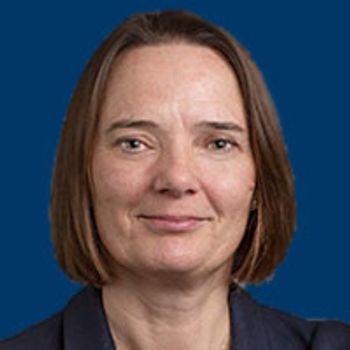
Faith E. Davies, MD, discusses pivotal research in relapsed/refractory myeloma and precision medicine efforts in the field.
Michael J. Overman, MD, discusses the current treatment landscape of metastatic colorectal cancer and ongoing research efforts in the space.
Clara D. Bloomfield, MD, the 2015 Giants of Cancer® award winner for Myeloid Neoplasms and a revolutionary physician-scientist, died March 1 at the age of 77.
Michael L. Grossbard, MD, discusses recent changes to the follicular lymphoma paradigm and therapeutic approaches on the horizon.

Patients with breast cancer who are ultrarapid or poor CYP2D6 metabolizers of tamoxifen have a worse prognosis compared with normal metabolizers after receiving a standard dose of the drug, due, in part, to a higher incidence of treatment-related adverse events.

Stephen J. Freedland, MD, discusses a real-world analysis of enzalutamide in patients with metastatic castration-resistant prostate cancer.

The FDA has granted a breakthrough device designation to the Elecsys GALAD score, an algorithmic score designed to aid in the diagnosis of early-stage hepatocellular carcinoma.

Shella Saint Fleur-Lominy, MD, PhD, discusses some of the current and investigational treatment options for patients with myeloproliferative neoplasms.
An ongoing clinical trial will assess whether the adjuvant combination of the personalized cancer vaccine mRNA-4157 and pembrolizumab improves recurrence-free survival compared with pembrolizumab alone in patients with complete resection of cutaneous melanoma and a high-risk of recurrence.

Jonathan W. Goldman, MD, discusses the current landscape of biomarker-driven lung cancer.

The antidepressant phenelzine showed antitumor activity in patients with biochemical recurrent castrate-sensitive prostate cancer.

James Weitzman, MD, discusses progress in the multiple myeloma treatment paradigm and what challenges remain.
The use of moderately hypofractionated radiation therapy demonstrated no statistically significant differences in functional outcomes compared with conventionally fractionated radiation therapy, further cementing hypofractionated radiation therapy as a standard approach for patients with nonmetastatic prostate cancer.

Hatim Husain, MD, discusses the current state of liquid biopsy in non–small cell lung cancer.
Michael K. Gould, MD, MS, discusses pivotal lung cancer screening trials and their impact on clinical practice.

The neoadjuvant combination of pembrolizumab plus chemotherapy led to a higher pathological complete response rate compared with placebo/chemotherapy in patients with early triple-negative breast cancer, across various patient subgroups.

The FDA has granted a Fast Track Designation to tipifarnib for the treatment of adult patients with relapsed/refractory angioimmunoblastic T-cell lymphoma, follicular T-cell lymphoma, and nodal peripheral T-cell lymphoma with T follicular help phenotype.
Routine cervical screening, conducted every 3 years, was found to reduce the incidence of stage I and stage II+ cervical cancers by 48% and 83%, respectively.
The FDA has approved isatuximab-irfc (Sarclisa) for use in combination with pomalidomide (Pomalyst) and dexamethasone for the treatment of adult patients with multiple myeloma who have received ≥2 prior therapies, including lenalidomide and a proteasome inhibitor.

The International Association for the Study of Lung Cancer (IASLC) announced it is naming the Translational Research Lectureship Award after longtime member and former IASLC CEO, Fred R. Hirsch, MD, PhD, Executive Director of the Center for Thoracic Oncology and Associate Director of Biomarker Discovery at The Tisch Cancer Institute at Mount Sinai and the Joe Lowe and Louis Price Professor of Medicine (Hematology and Medical Oncology) at the Icahn School of Medicine at Mount Sinai.

The European Medicines Agency’s Committee for Medicinal Products for Human Use has adopted a positive opinion for a Marketing Authorization Application for brigatinib for the first-line treatment of patients with ALK-positive metastatic non–small cell lung cancer

Selinexor in combination with bortezomib and low-dose dexamethasone led to a statistically significant increase in progression-free survival compared with bortezomib/dexamethasone alone in patients with multiple myeloma who have received 1 to 3 prior lines of therapy.
The FDA has granted a priority review designation to a biologics license application for the combination of tafasitamab and lenalidomide for the treatment of patients with relapsed/refractory diffuse large B-cell lymphoma.